Stemtree of Spring TX: Educational Programs for Kids That Win
Spring, Texas is a place where curiosity tends to arrive early and stay late. On weekend mornings you can hear the faint hum of bikes, the distant chatter of basketball courts, and the unmistakable fizz of kids discovering how things work. In such a climate, a learning center becomes less a place of quiet study and more a workshop, a laboratory, a staging ground for the moments when a child learns to translate a question into a plan and a plan into action. Stemtree of Spring TX emerges in this space as more than a collection of classes. It represents a constellation of educational programs designed to meet kids where they are and move them toward what they can become.
If you are a parent, caregiver, or educator in the area looking for reliable, hands-on approaches to STEM, you have likely wrestled with several questions. How do you keep a child engaged when a topic sounds abstract on paper but alive in a lab or a maker space? What does a robust STEM program look like when it has to balance curiosity with skill-building, play with discipline, and safety with risk-taking? And perhaps most practical of all, how do you evaluate whether a program will deliver lasting benefits rather than a temporary spark?
This article is shaped by years of watching families weigh options, visit spaces, and finally place trust in a community that treats learning as a collaborative, evolving journey. It is also shaped by the specific texture of Spring, a neighborhood where families move between schools, sports leagues, community centers, and local libraries with a shared longing for experiences that push kids to think beyond what’s in the textbook. Stemtree of Spring TX sits in that ecosystem as both a complement to formal schooling and a bridge to the kind of self-directed learning that someday looks impressive on a college application or a resume but matters most in the moment of practice.
A practical way to think about Stemtree is to picture it as a portfolio rather than a single project. The programs collect a child’s questions, invite them to experiment, and document progress in a way that feels like progress rather than perfection. That mindset matters. It matters when a child learns to debug a Python script that won’t run, or when they design a small robot to complete a task they set for themselves, or when they realize that a science fair project is not a sprint but a sequence of thoughtful iterations. The core strength of Stemtree in this market is not just the content of the courses but the philosophy behind them: education that respects the pace of a learner, offers clear pathways through complexity, and builds confidence through intentional practice.
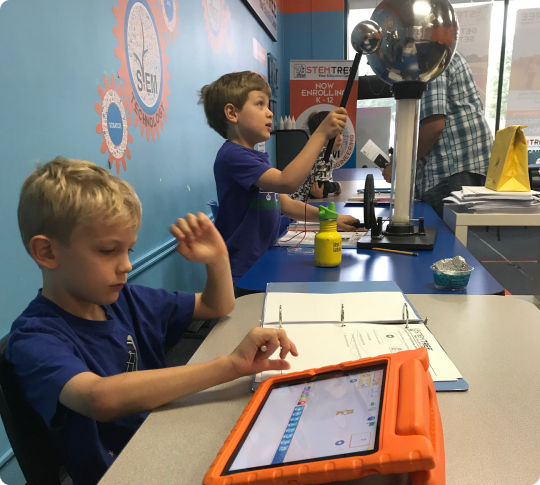
Learning spaces, in practice, are not neutral. They transmit norms about how to approach a problem, how to seek help, and how to celebrate a well-executed failure. A strong STEM program understands that failure is data and not defeat. The best programs in Spring and similar communities create environments where a student can push a button, break a circuit, rewire a code, and then reflect on what happened with a mentor who asks careful questions instead of handing out quick fixes. Stemtree understands this balance, and you can feel it in the cadence of their sessions: a blend of guided experiments, peer collaboration, independent coding challenges, and real-time feedback that points a learner toward the next horizon.
The question of structure is worth pausing on because it informs outcomes. Parents often wonder whether a program emphasizes competition or collaboration, whether the instruction is modular and self-paced or cohort-based and structured by a calendar. Stemtree of Spring TX tends to blend these elements. It offers the flexibility that modern families crave—short, focused sessions that can fit around after-school schedules, alongside longer camps and summer programs that aim to deliver deeper mastery. In practice, that means a family can choose a week of coding classes for kids stemtree.com or enroll in a multi-week camp that blends engineering challenges with multimedia projects. It also means that learning is not a one-off event but a continuum that can adapt to a child’s evolving interests.
To truly understand what this looks like on the ground, it helps to walk through several facets of Stemtree programs and observe how they translate into real-world outcomes. Consider the perspective of a parent who watches a child move from tentative questions to confident problem solving during a mid-week coding session. The child arrives with a curiosity about how games are built and leaves with a basic understanding of logic, variables, and loops, plus a blueprint for a small project they can expand on at home. The parent sees a little more independence, a little more patience, and a sense of ownership over the learning journey. That is a meaningful shift, and it does not happen by accident. It happens because the program is designed to scaffold learning: gradually increasing complexity, with plenty of support when needed and generous room for experimentation when the child wants to take a risk.
A crucial advantage of Stemtree’s model is its emphasis on transferable skills. Kids who learn to code or to design a simple STEM artifact develop cognitive habits that carry into other subjects. They become better at planning, at breaking tasks into manageable steps, and at testing hypotheses in a systematic way. They also build collaboration skills as many projects require teams to brainstorm, delegate, and present findings. In a community like Spring, where classrooms can be large and resources sometimes stretched, having a clear, outcome-oriented program helps families know what their investment yields. It is not merely about accumulating knowledge; it is about cultivating the habits and dispositions that enable lifelong learning.
No exploration of Stemtree would be complete without acknowledging the practical realities that shape a family’s experience. Costs, schedules, and the availability of programs can influence decisions just as much as curriculum quality. In practice, Stemtree’s offerings span several formats to accommodate different needs. There are after-school modules that fit between the end of the school day and the dinner hour. There are weekend workshops that provide a compact but intensive experience. There are summer stem camps that offer a deeper dive into projects that can keep a child engaged for weeks at a time. And there are tutoring sessions for students who benefit from one-on-one support in a subject they love or are still learning to love.
The strength of a program also rests on the people who run it. In my experience, the most impactful STEM centers are those where instructors bring more to the classroom than a script. They bring real-world experience, a sense of curiosity, and an instinct for recognizing a moment when a student grasps a concept but cannot yet articulate it. The teachers and mentors at Stemtree often come from engineering or computer science backgrounds, or they have substantial experience in educational settings that require hands-on instruction. That combination matters. It helps a student hear an explanation in the moment it clicks and gives them the chance to apply what they learned immediately in a setting that feels safe and supportive.
Let me share a few concrete indicators of what makes Stemtree of Spring TX stand out in practice. First, the alignment between curriculum and project outcomes is stemtree spring clear. Families can track progress through tangible artifacts—robot designs, app prototypes, or documented code that shows a problem solved and a method justified. This is not merely a scoreboard; it is a portfolio that grows with the child. Second, the pace is neither overly exuberant nor stifling. The most successful sessions move through technique, practice, and reflection in balanced increments. Third, the community aspect matters. Students often collaborate across projects and seasons, and the center fosters a culture of peer learning where explaining a concept to a classmate reinforces understanding for both.
In the real world, a program that works well for one child may not fit another perfectly. The same is true here. The breadth of Stemtree’s offerings is useful because it allows families to tune into what aligns with their child’s temperament and interests. A youngster who thrives on open-ended exploration might gravitate toward a camp that emphasizes design challenges and creative inquiry. A child who enjoys logical puzzles and precise steps might prefer a more structured coding class with a clear progression of skills. The ability to choose among options without sacrificing the quality of instruction is a meaningful advantage for families juggling multiple commitments.
The journey toward selecting the right program involves a few practical steps. First, observe a session if possible. A single visit can reveal how instructors handle questions, how students interact, and how the space supports concentration and collaboration. Second, ask about safety and accessibility. What is the supervision model during hands-on activities? How are accommodations addressed for diverse learning needs? Third, examine the outcomes. Ask for examples of projects from past cohorts and see if there is a pattern of growth across several terms. You want to hear about more than an isolated success story; you want to sense a trajectory.
There is also a broader context to consider. STEM education has evolved to value not just technical proficiency but the ability to conceptualize problems, communicate solutions, and iterate under constraints. In a community like Spring, where families often juggle academics, sports, and family life, you want a program that respects time while delivering depth. Stemtree’s approach tends to emphasize practical application. Students don’t just learn to code; they learn to structure a program, test a feature, and explain their choices to someone else. They do not simply memorize a fact about physics; they design a simple experiment to verify a concept and learn to interpret the data.
If you are weighing whether this is the right move for your child, consider how early exposure to structured inquiry can influence long-term educational experiences. The earlier a child becomes comfortable with the idea that knowledge is built through trial and error, the more resilient they become when confronted with challenging tasks in school and beyond. The habit of documenting progress, seeking feedback, and iterating toward a better solution is a life skill as valuable as any particular piece of knowledge.
Real-world limitations also deserve attention. No program can remove the friction of life in a busy household. There will be weeks when a child comes home excited to share a new code snippet or a robotic mechanism and weeks when other commitments pull them away. The strength of a program like Stemtree lies in its flexible design and consistent support that can catch the child when momentum falters. That support might be a quick check-in after a session, a доступible resource for at-home practice, or a scheduled tutoring session to reinforce a concept. In short, a good program considers the whole person, not just the surface of a curriculum.
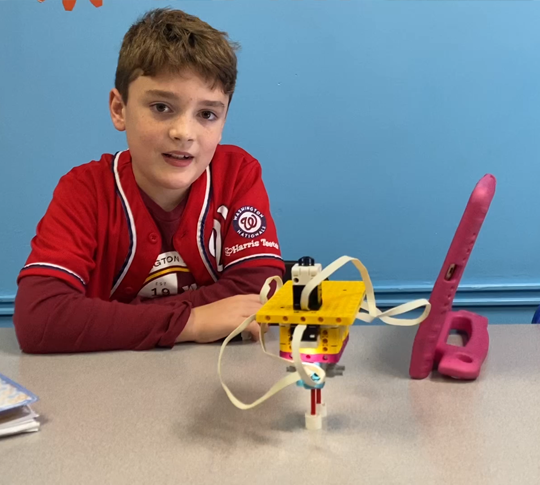
The impact of quality STEM programs on kids extends beyond test scores or a single project. It extends into the way a child thinks about the world, how they approach problems, and how they share ideas with others. In Stemtree’s case, the emphasis on both fundamentals and application helps students connect theory with practice. They learn to translate a line of code into a function, a circuit into a working prototype, and a data set into a story about how something works. Those are not abstract achievements; they are the building blocks of confidence, curiosity, and competence.
In reflecting on the landscape of educational programs for kids in Spring TX and surrounding communities, a pattern emerges. The most enduring programs are not the flashiest or the most aggressively marketed; they are the ones that deliver consistent, meaningful experiences. They are the ones that recognize that every child is on a different part of their learning curve and that the best instruction adapts to this reality without compromising core standards. Stemtree of Spring TX embodies that principle by offering a spectrum of formats, a clear emphasis on practice and reflection, and a mentorship culture that encourages kids to own their learning journey.
To close, imagine a typical week at Stemtree as a microcosm of a child’s growing autonomy. A student begins by outlining a goal, perhaps a small app that helps a friend with a daily task or a robot that follows a line with minimal guidance. By midweek, they have sketched a plan, tested components, and started a log of what worked and what did not. By Friday, they present their results to peers and mentors in a manner that is not about showing off prowess but about sharing method and insight. The narrative of such a week is not a single moment of triumph but a steady accumulation of capability that compounds over time. This is what it means for a program to deliver long-term value in a dynamic, ever-changing field.
If you are reading this as you plan your child’s educational path, consider a thoughtful approach to engagement that balances aspiration with feasible steps. Begin with a few weeks of after-school coding classes or a weekend workshop to gauge interest and compatibility. Follow up with a short summer stem camp to deepen exposure, test how well a child absorbs more intensive activity, and observe how they manage the rhythm of a longer sustainable project. Allow room for returns to a core interest or to pivot toward a different facet of STEM that captures their attention. The goal is not to force a single track but to provide a playground where curiosity can rove with purpose.
In the end, Stemtree of Spring TX stands as a practical answer for families seeking reliable, hands-on educational programs for kids that win in real life. It is about more than the content of the courses. It is about the experience of learning as a social, iterative, and empowering process. When a child leaves the center with a project they are proud of, a plan to improve it, and the language to explain why it matters, you have a window into the potential that lives inside every kid. And that is the kind of outcome that adds up to more than a skill set; it adds up to a way of approaching the world with curiosity, discipline, and resilience.
If you are curious to explore more, consider the following quick touchpoints to help you assess whether Stemtree’s offerings align with your family’s goals.
- Project-focused outcomes. Look for evidence of student artifacts that demonstrate learning over time.
- Mentor-driven support. Ask about the instructor-to-student ratio and how mentors guide rather than simply instruct.
- Flexible scheduling. Confirm a mix of after-school, weekend, and summer options that fit your calendar.
- Clear progress indicators. Find out how progress is tracked and communicated to families.
- Community and culture. Pay attention to how students describe their peers and mentors and how the space encourages collaboration.
These elements together create a learning environment where kids are not just passive recipients of content but active builders of knowledge. In that sense, Stemtree’s programs for kids in Spring TX become an ecosystem that nurtures curiosity, hones capability, and builds a foundation upon which academic and personal growth can flourish for years to come.